
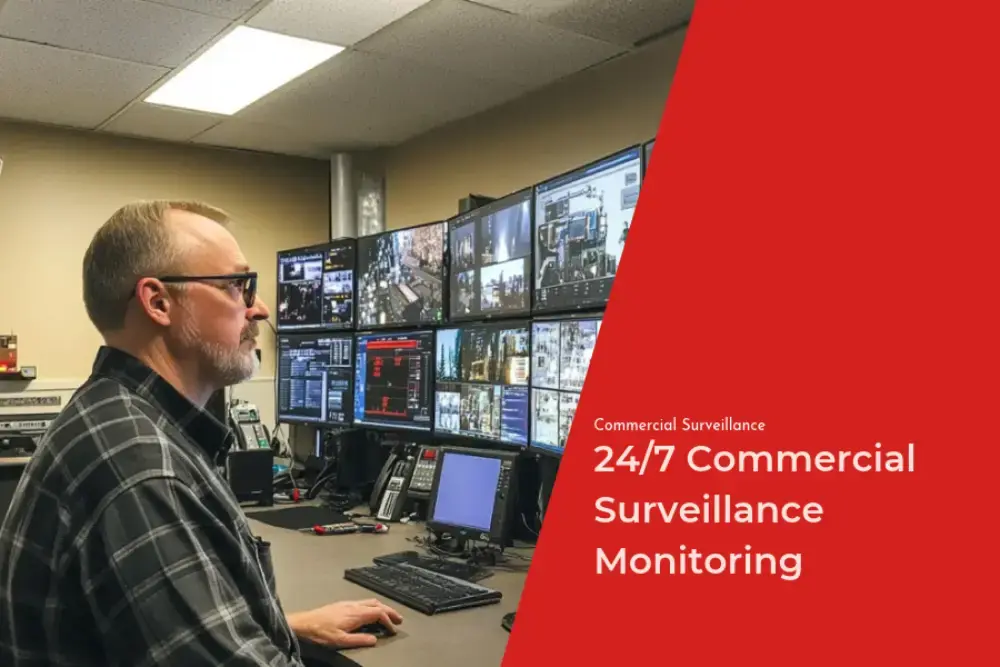
Installing security cameras is a good first step toward protecting your business. But what happens when a camera detects suspicious activity and nobody is available to check the footage?
Modern cameras can detect motion and send alerts, but someone still needs to review suspicious activity and decide whether to respond. By the time you check the recordings, the damage may already have occurred.
For growing businesses with valuable inventory or unattended locations, 24/7 commercial surveillance monitoring can provide an extra layer of security.
This guide covers five reasons growing businesses need professional monitoring, along with the key features and costs to consider.
What Is 24/7 Commercial Surveillance Monitoring?
24/7 commercial surveillance monitoring is a security service that helps businesses detect and respond to potential threats around the clock. Depending on the service, trained operators may watch selected camera feeds or review alerts from connected security systems.
Connected cameras and security devices send video feeds or alerts to a remote monitoring center. When an alert indicates a potential threat, operators review the footage and follow the agreed response plan if necessary. This may involve notifying the business owner or contacting emergency services.
How Does 24/7 Surveillance Monitoring Work?

A commercial surveillance system uses security cameras to keep an eye on important areas of your business, such as:
- Entrances
- Parking lots
- Warehouses
- Stockrooms
The process begins when a camera or sensor detects activity in a monitored area. The system sends an alert to the monitoring center, where an operator reviews the available footage. If the event requires attention, the operator follows the property’s response plan.
For example, if someone enters your warehouse after closing hours, the system can:
- Detect movement through a camera or security sensor.
- Send an alert to the monitoring team.
- Allow security staff to check the live footage.
- Contact the business owner or request police assistance if necessary.
This way, your business can receive attention even when nobody is on-site. However, the exact response depends on your security equipment, monitoring service, and agreed response plan.
Continuous Video Recording vs. Professional Live Monitoring: What’s the Difference?
Continuous recording stores video so you can review it later. Professional live monitoring allows trained operators to review suspicious activity while it is happening.
For example, let’s consider a camera that records someone cutting a fence at 1:40 AM. With recording only, you find the clip at 7 AM, and the thief is long gone. However, with live monitoring, an operator can take immediate action while the person is still on site.
That means both options track activity, but there is a significant difference in the level of oversight. Here is a quick comparison of both:
| Factor | Continuous Video Recording | Professional Live Monitoring |
| Main Purpose | Recording for later viewing. | Live recording and monitoring |
| Monitoring | Cameras record footage without constant human oversight. | Trained operators review alerts or designated camera feeds. |
| Threat Detection | When reviewing recorded footage | Operators can identify threats live. |
| Response Time | Often a delay in action | Operators can take quick action. |
| Incident Investigation | Provides recorded footage as evidence | Provides footage and monitoring records |
| Who Manages Security | Business owners or their staff | A professional monitoring team |
5 Reasons Growing Businesses Need 24/7 Commercial Surveillance Monitoring
As your business grows, you may extend operating hours or open another location. Both changes can make security harder to manage.
Professional surveillance monitoring helps you oversee vulnerable areas without having to check every camera yourself. Here are some common ones that necessitate 24/7 commercial surveillance monitoring for expanding organizations:
1. Deter Theft, Vandalism, and Unauthorized Access
Theft and vandalism can disrupt business operations and lead to costly losses. Professional surveillance monitoring helps businesses detect suspicious activity near entrances and restricted areas before an incident escalates.
For example, retail stores may lose valuable products to shoplifting, while warehouses may face inventory theft. Similarly, restaurants and offices can become targets for break-ins after closing hours. According to the National Retail Federation’s 2026 report, 40% of surveyed retailers reported an increase in organized retail crime-related incidents.
With a monitored surveillance system, security staff can receive alerts when someone enters a restricted area or behaves suspiciously.
2. Detect Security Threats Early and Support Faster Response
Another benefit of 24/7 video monitoring is the opportunity to respond to suspicious activity before it leads to a more serious incident. Let’s suppose someone tries to break into your business at midnight. Your cameras are recording everything. But how useful is that footage if nobody reviews it until the next morning?
Live monitoring helps close this response gap. Instead of discovering a break-in the next morning, your monitoring team may identify the activity while it is happening and follow the agreed response procedure. A monitored security system can detect unusual activity and send an alert to trained operators. From there, the monitoring staff can check if there is any suspicious activity.
For example, if someone approaches a locked storage gate after working hours, the system may detect their movement. As a result, you have a better chance of identifying and catching intruders.
3. Improve Employee and Customer Safety
No business wants to put their employees and customers at risk. Instead, companies usually make protecting their staff and visitors their top priority. But that protection is not all about setting up a few cameras and fire emergency equipment.
Instead, it is mainly about providing a secure environment. But unfortunately, workplace safety has become a growing concern. According to the National Retail Federation’s 2025 report, surveyed retailers reported a 17% increase in the average number of threats or acts of violence during theft incidents in 2024 compared with 2023.
Commercial surveillance monitoring can help you keep an eye on these areas and identify potential safety concerns.
For example, suppose you own a restaurant where employees regularly leave after midnight. When your cameras are connected to the central monitoring station, they can detect suspicious activities near the rear entrance and parking lot.
4. Capture Video Evidence and Reduce Business Liability Risks
Accidents and property disputes may happen even when a business follows its safety procedures. Clear video footage can help establish what happened and support an incident investigation. A customer, for instance, may slip near your store entrance. Similarly, an employee may report damaged equipment. At the same time, a delivery may arrive with missing items.
All such situations require you to have clear evidence of what actually happened and whether someone saw it firsthand. That is only possible when you have surveillance cameras active 24/7 without any downtime.
With live monitoring, you can easily tell when and how an incident happened, especially if a customer reports an accident inside your workplace. Above all, recordings may also help identify who entered a restricted area or handled valuable equipment.
5. Protect Multiple Locations and Support Business Growth
24/7 business monitoring can also help growing companies oversee security across multiple locations. As a business owner or manager, you cannot be everywhere at once. Also, visiting each location just to check security cameras is not a practical option.
Even if you have remote access to cameras at all locations, you cannot watch all the sites simultaneously. A centralized monitoring service can help you manage security across multiple locations. Instead of checking separate camera systems throughout the day, you can rely on a monitoring team to review alerts from each connected site. The National Retail Federation’s 2026 report found that 61% of surveyed retailers invested in risk-intelligence technologies as part of their workplace violence prevention efforts.
Like other companies, you should also invest in professional monitoring to secure all locations at once. This way, you ensure that every site is under constant monitoring and better prepared to detect suspicious activity and respond to security threats.
What Features Should a Commercial Surveillance Monitoring System Include?
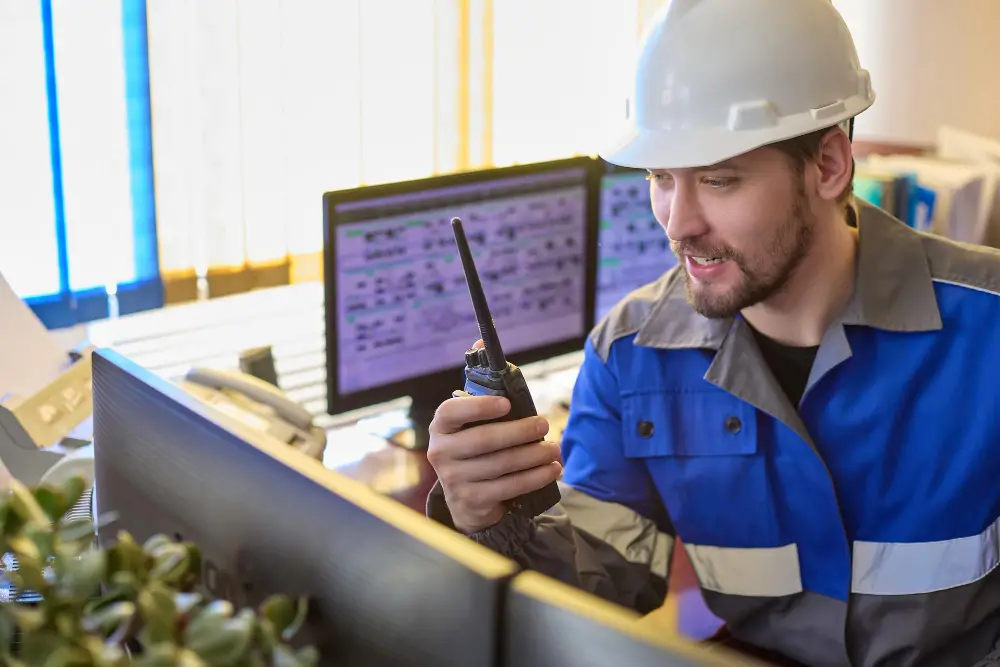
A smart monitoring system should be capable of alerting you to every potential risk, from intrusion to theft. We recommend considering the following features when planning to get a monitored security system for your business:
High-Definition Cameras and Night Vision
High-definition cameras can capture useful details such as clothing and vehicle features. However, resolution alone does not guarantee clear footage. Lighting conditions and camera placement also affect what operators can see during an incident.
Even high-quality cameras may miss important activity if you install them at the wrong angle or leave blind spots around entrances. So, make sure that you place them where they cover all the essential angles.
Motion Detection, Smart Alerts, and Remote Access
Motion detection should be an integral part of smart camera systems. It identifies activity across selected areas within seconds. Besides that, you should also look for smart alerts to get notified whenever someone tries to enter a restricted area, both within and outside business hours.
Above all, do not forget to have remote access to your entire system, especially cameras. It lets you check live video through your phone or computer anytime and anywhere.
Secure Video Storage and Footage Retrieval
Your business needs a reliable way to store and retrieve recordings.
For that, you can use common options that include local network video recorders and cloud-based storage. You can also go for systems that combine both.
When comparing storage options, make sure you check the following things:
- How long the system retains recordings.
- Whether authorized users can download footage.
- How the system protects recordings from unauthorized access.
- What happens during internet or power interruptions.
Note: Your storage requirements usually depend on camera resolution, recording schedules, and the number of cameras.
Integration With Intrusion Alarms and Access Control
Another important feature that business owners must consider in a surveillance system is the integration with alarm and access control systems. Security cameras become more useful when they work with other security equipment.
For example, an intrusion alarm may trigger a camera recording when someone opens a restricted door after closing.
How Much Does 24/7 Commercial Surveillance Monitoring Cost?
Some commercial video monitoring providers quote approximately $100 to $500 or more per month for a single location. However, it is important to remember that commercial surveillance costs can vary according to the property, equipment, and monitoring service.
For example, a small retail store with four cameras will have different requirements from a warehouse with multiple outdoor loading areas.
Note: Installation costs may include cameras, recording equipment, cabling, network configuration, and professional labor. Ongoing charges can cover professional monitoring, cloud storage, maintenance, and software services.
Is 24/7 Surveillance Monitoring Worth the Investment?
Yes, 24/7 surveillance monitoring can be a worthwhile investment, especially if your business
- Has valuable inventory
- Operates late at night
- Remains unattended after working hours
Think about the cost of a single break-in. Apart from stolen equipment or products, you may have to pay for damaged doors, repairs, and cleanup. In some cases, you may even need to close your business temporarily, which can lead to further financial losses.
According to the FBI’s 2024 property crime report, the United States recorded an estimated 5.99 million property crime offenses in 2024. Although this figure was an 8.1% decrease from 2023, theft and burglary remain serious concerns for business owners.
Of course, no surveillance system can completely prevent crime. However, professional monitoring can help detect threats sooner, support faster responses, and provide useful video evidence when incidents occur.
So, when you compare the monitoring costs with the potential losses from a security incident, the investment may be well worth it.
FAQs
What is the difference between self-monitoring and professional monitoring?
The first one requires you to monitor your security system on your own, while the second one demands a professional team for monitoring. It is completely up to you which approach you prefer, but professional monitoring adds an extra layer of protection.
Do Commercial Security Cameras Record 24/7?
It depends on whether you have connected a storage system or not. Most cameras can usually continuously record footage and save it to the storage device. Motion-based recording saves space and can miss the seconds before an event unless the system buffers video.
Can I Monitor My Business Security Cameras Remotely?
Yes, you can. In fact, many business owners have remote access to their security systems. However, that does not replace the need for professional monitoring. This is because you cannot watch live business security all the time.
Can monitoring work with the cameras I already have?
Many modern commercial camera systems support remote viewing through mobile apps or web platforms. You generally need compatible equipment, an internet connection, and authorized login credentials.
Does 24/7 Surveillance Monitoring Require Someone to Watch the Cameras All the Time?
No, because most of the monitoring services use automated detection to identify suspicious activities. They even automate the operator notification system to save time and speed up the response. However, continuous human viewing may also be available through some services.