
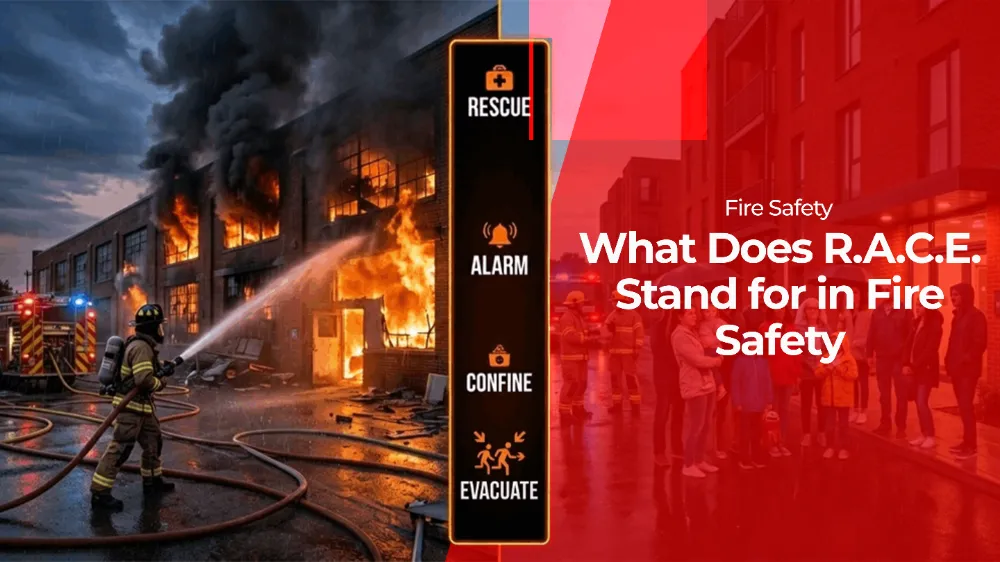
If you have ever been in a fire emergency, you might know that it’s really challenging to stay calm in such a situation. As the smoke spreads or the alarm starts ringing, people rush to move away from the danger and feel unsure about what to do. That’s the reason why special fire safety rules have been introduced.
These protocols enable you to take the right action at the right time to protect yourself and others. RACE (Rescue, Alarm, Confine, and Evacuate) is also a protective method that supports fire safety.
In this article, we will understand what exactly this term means and how the RACE fire safety procedure works. So, let’s set off on this highly informative journey.
What Is the RACE Acronym in Fire Safety?
The RACE acronym is a simple four-step plan that allows you to respond quickly and safely during a fire. Each letter stands for an essential action that equally contributes to protecting from the dire consequences of fire. Here is a quick overview of what exactly each letter of the fire safety acronym means:
- R for Remove or Rescue
- A for Alarm
- C for Confine or Contain
- E for Extinguish or Evacuate
This simple structure immediately comes to your mind during firefighting. It provides you with a clear idea of what to do first and what to keep for the end of the emergency. Together, these steps ensure that you and the people around you remain safe.
Read More: What Is A Centrally Monitored Fire Alarm?
How Does the RACE Fire Safety Procedure Work?
Now that you have the answer to “What does RACE stand for in fire safety,” let’s take a closer look at its procedure. Learning this process makes you a responsible, prepared individual who can care for valuable lives during a fire emergency. So, let’s start.
Rescue Anyone in Immediate Danger
The first step in this fire safety training is to quickly save someone in immediate danger. Look around you and check where the fire starts. Keep an eye on individuals in the vicinity of the impacted zone, particularly those who might struggle to leave without assistance. These individuals usually include
- Children who need adult assistance.
- Elderly individuals with mobility issues.
- Patients sitting or lying anywhere.
- Visitors who don’t know about exits.
- Anyone trapped near the fire.
However, make sure that you attempt a rescue only if it is safe for you because your safety comes first. If you think the situation is too dangerous, don’t put yourself at risk.
Activate the Fire Alarm System
If you don’t see anyone trapped near the fire or you have already removed them, your next step is to alert everyone in the building. For that, all you need to do is reach the nearest fire alarm pull station and activate it immediately. You can do it by just pulling the lever or pressing the button on the alarm system.
Besides that, follow the practices below to ensure everyone is aware of the fire, including authorities:
- Shout out “Fire” loudly to warn anyone nearby.
- Call the local fire department immediately.
- Notify building security or the safety manager.
Contain the Fire from Spreading Further
The third step in the RACE fire safety procedure focuses on containment, preventing the fire from spreading. By confining the blaze, you help keep smoke from choking people or obscuring their vision. This move gives everyone precious extra minutes to get out safely before the firefighters arrive. Just keep in mind, you should only attempt to contain the fire if it’s safe to do so. Here’s how to do it safely:
- Close doors and windows.
- Turn off gas sources, if present.
- Turn off the electricity in that area.
- Remove any flammable things.
In case you feel that the flames or heat can cause you significant damage, it’s better for you to wait for the professionals to contain the fire.
Extinguish the Fire and Evacuate When Needed
The last step in the RACE acronym indicates extinguishing the fire. However, you should do it only if the fire is small and manageable. But you can attempt to extinguish large fires only if you have received fire safety training. While it is quite hard for non-professionals like you to control the flames completely, you can at least try to play your part. The following practices can help you give your best in such situations:
- Pick the correct fire extinguisher.
- Aim at the base of the fire.
- Stay low to avoid inhaling smoke.
- Keep a clear exit route behind you.
If you notice the fire is growing instead of stopping, evacuate immediately and ask those nearby to do the same.
Where Is This Fire Emergency Response Procedure Useful?
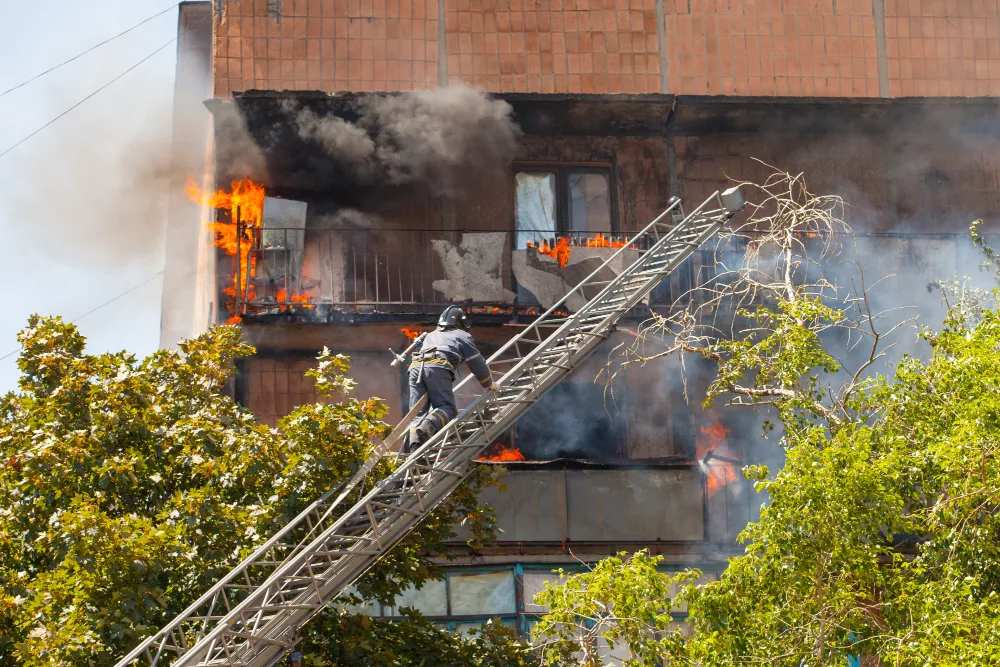
The RACE fire safety procedure is helpful anywhere you need quick, organized action to protect your life and others’. These include both residential and commercial properties. While it’s useful everywhere, there are certain places where people may be at higher risk or less able to respond quickly. Here is a brief list of the most prominent places among them:
- Office Buildings
- Restaurants
- Industries
- Schools
- Healthcare Facilities
- Hotels
- Shopping malls
- Warehouses
- Apartment buildings
- Airports and stations
Summing It Up
To put it briefly, the RACE acronym means rescue, alert, confine, and evacuate. It’s a structured procedure that helps you stay calm and respond confidently to a fire emergency. Each of its letters hints at a particular step that takes you and people around you closer to safety. But remember, relying solely on such smart procedures is not enough to ensure your complete security.
Instead, you need to install advanced fire safety solutions at your residential or commercial property to detect risks and respond as quickly as possible. Fortunately, Elite Security Alarms provides customized solutions for both homes and businesses to stay protected from fire. Our solutions come with professional monitoring, fast alerts, and expert guidance, ensuring that any fire threat is identified immediately.
By combining R.A.C.E. knowledge with our reliable systems, you can enjoy peace of mind knowing your property and loved ones are always safe. So, take your ultimate fire safety step now.
FAQs
What does RACE stand for in fire safety?
The RACE acronym represents a four-step procedure for responding to a fire emergency systematically. It stands for Rescue, Alarm, Contain, and Extinguish or Evacuate. This protocol helps individuals prioritize human life while taking logical steps to limit property damage.
What is the first step in the RACE procedure?
The first and most critical step is Rescue. It means you must immediately move anyone in the direct vicinity of the fire to a safe area. You are not looking for a fire extinguisher yet; you are making sure people can breathe and are away from heat or falling debris. Only once you confirm that everyone is out of immediate danger should you move on to the “Alarm” phase of the RACE fire safety procedure.
Can you use RACE at home?
You can absolutely apply the RACE procedure for fire safety in a residential setting. While the protocol is a staple in hospitals and offices, the logic remains the same for a house fire. You rescue family members first, shout or trigger a home alarm, close doors to keep the fire from spreading to the hallways, and then decide if you can fight the fire or if you need to run.
What is the difference between RACE and PASS?
RACE is the overall fire emergency response procedure for the entire building, while PASS (Pull, Aim, Squeeze, and Sweep) is the specific technique for operating a fire extinguisher. Think of RACE as the plan for your surroundings and PASS as the manual for the tool in your hands. You should only start the extinguish part of the RACE process if you are comfortable performing the pull, aim, squeeze, and sweep method of the PASS technique.
Should you try to extinguish every fire?
You should not try to extinguish every fire. Instead, you should only attempt to extinguish a fire if it is small, contained, and not spreading rapidly. Safety professionals often refer to this as a “wastebasket-sized” fire. If the flames are taller than you or if the smoke is becoming thick and black, you must skip the “Extinguish” step and move straight to “Evacuate.”
When should you evacuate instead of using a fire extinguisher?
You must evacuate the moment you realize the fire is beyond your control or if your primary exit route is threatened. Fire safety training emphasizes that your life is worth more than the structure. If you have discharged one full extinguisher and the fire is still growing, do not look for a second one.