Most security issues do not begin with a dramatic break-in. They start quietly. A package may go missing at home. In the office, confidential documents may disappear, or a disagreement over equipment may escalate with no clear answer. Sometimes an unusual activity may occur after working hours, and no one can say what actually happened.
These kinds of situations create stress because there is no clear record of events. Without visibility, you replay scenarios in your head. This is where CCTV security cameras change everything. They replace uncertainty with evidence and give you a clear view of what happens on your property when you are not there.
In this guide, you will explore what CCTV security cameras are and how they work. You will also learn how to choose the right system to better protect your home and business.
What Are CCTV Security Cameras?
CCTV security cameras are video cameras that record activity on your property and send the footage to a private system. Only people you approve can view it. That is what “closed-circuit television” means. The video stays within your control.
People use CCTV cameras to keep an eye on their homes and monitor activity around their businesses. They are not about spying. They are there to help you see what’s really happening and keep things accountable.
Every CCTV system has a few essential parts working together:
- Cameras that capture video from selected areas
- A recording device, such as a DVR or NVR
- Storage that holds footage for a set period
- A viewing option, like a monitor or mobile app
- A connection method using cables or a network
- A power source that keeps everything running
Types of CCTV Security Cameras
CCTV cameras are not one-size-fits-all. They differ in their design, technology, and intended use. Let’s explore the most common types of CCTV cameras that you can use for homes and businesses:
CCTV Camera Types by Design
- Bullet Cameras
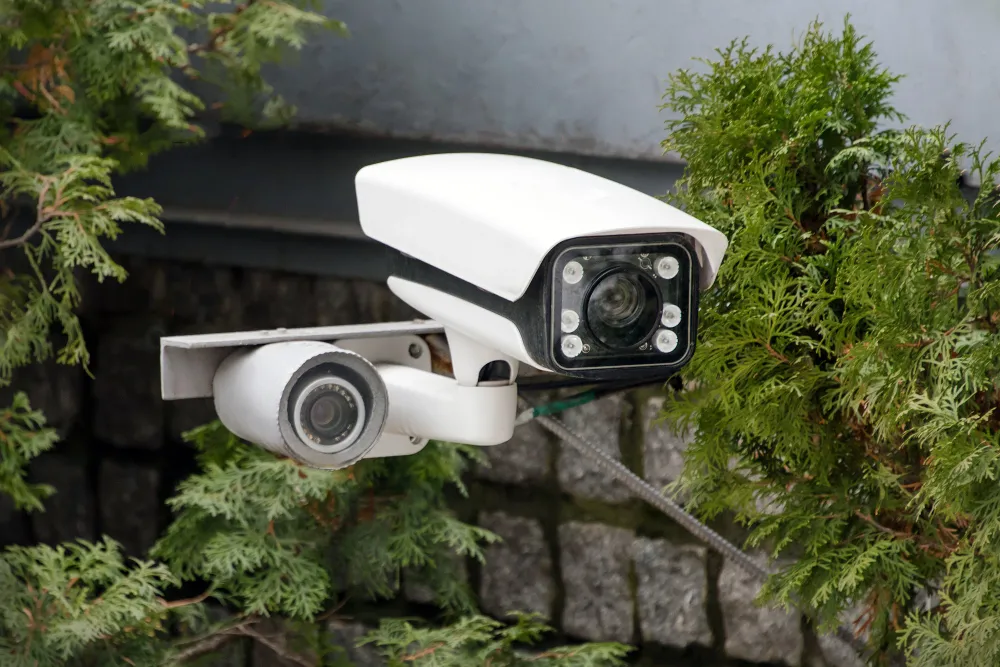
Bullet cameras are easy to spot. Their shape supports longer viewing distances, which makes them well-suited for outdoor areas such as driveways or walk-up paths.
People often change their behaviour when they notice a bullet camera. For best results, pay close attention to the viewing angle. Position the camera toward the approach path rather than pointing straight down at a doorway to capture clearer facial details.
- Dome Cameras
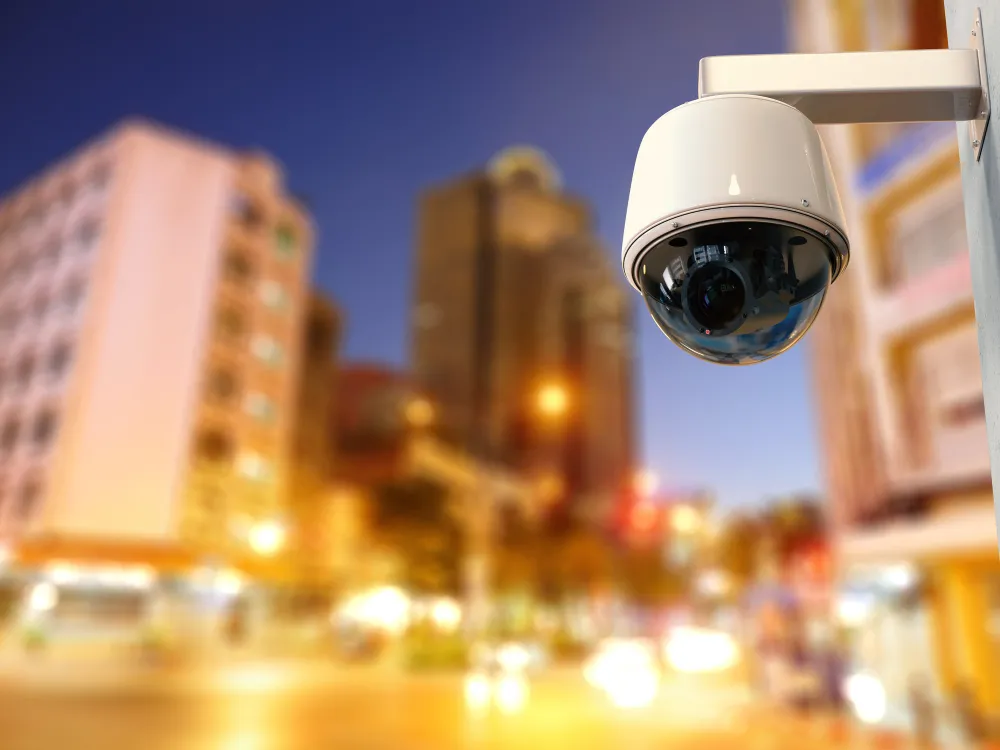
Dome cameras work well when you want coverage without drawing attention. Their rounded shape makes it difficult to tell where the lens is pointing, which discourages people from trying to avoid the camera’s view.
Many dome cameras offer wide-angle coverage for open spaces such as shop floors, restaurants, storage rooms, and offices. Some models can rotate up to 360 degrees, which helps you cover more angles from one mounting point when the camera supports that movement.
- PTZ Cameras
PTZ cameras are a good fit when you want more control over what the camera sees. Instead of being locked into one view, you can pan side to side, tilt up or down, and zoom in when something catches your eye.
Since PTZ cameras can cover wide areas, sometimes close to a full 360 degrees, they’re often used in large spaces such as retail stores or parking lots. They work best when someone actively monitors them or when preset movements are programmed in advance.
- Turret Cameras
Turret cameras are popular because they offer flexibility without being bulky. Their design reduces glare from nearby lights, which helps at night. Many people choose turret cameras near entrances or porches where reflections can interfere with footage. They are also easier to fine-tune during installation.
- License Plate Recognition (LPR) Cameras
LPR cameras focus on a single task: clearly capturing license plates. They need careful placement to work properly. When installed correctly, they reliably record plates day or night, even with headlights, changing weather, or moving vehicles. These cameras are commonly used in parking areas or gated access points.
CCTV Cameras by Technology
- Analog CCTV Cameras
Analog cameras use coaxial cables and record through a DVR. They are straightforward and stable. Many older buildings already have the required wiring, which makes analog systems a practical option without major modifications.
- IP (network) Security Cameras
IP cameras send video over a network and record it to an NVR. They usually give sharper images and make it easier to view footage remotely.
Many IP cameras use Power over Ethernet (PoE), so a single cable provides both power and data. This keeps installation simple and tidy. These systems are also easy to expand if you want additional cameras later.
- Wired vs. Wireless Systems
Wired systems provide consistent performance and steady power, which makes them reliable for long-term use. Cameras connect through a network of power and Ethernet cables. They are usually routed back to a central control or recording location with monitors and storage. This setup makes managing and maintaining the system easier over time.
Wireless systems offer greater flexibility in placement but rely on Wi-Fi strength. Cameras usually have their own power source, and some models include batteries. These setups work well when running cables is difficult or impossible, though performance can vary depending on network conditions.
CCTV Cameras by Usage
- Indoor Cameras
Indoor cameras are all about clarity and covering as much area as possible. You can use them in these spots:
- Hallways
- Living Rooms
- Reception Areas
- Storage Spaces
Tweaking the motion settings can help avoid recording empty rooms all day, so you only capture what matters.
- Outdoor Cameras
Outdoor cameras need durable housing and strong night vision. They protect entrances, parking areas, and perimeters. A good placement captures faces as people approach, not after they cross inside.
When choosing outdoor cameras, you need to understand IP ratings. This rating tells you how well a camera handles dust and water.
The rating has two numbers. The first number indicates protection against solid particles, such as dust. The second number shows protection against water.
For example, many outdoor cameras use an IP65 rating. This means the camera is sealed against dust and can handle heavy rain or water spray.
Here’s a quick IP rating guide:
| IP Rating Digit | Protection from Solids | Protection from Liquids |
| 0 | No protection | No protection |
| 1 | Large objects like a hand | Dripping water |
| 2 | Fingers or similar objects | Water dripping at an angle |
| 3 | Tools or thick wires | Light spraying water |
| 4 | Small wires or screws | Splashing water |
| 5 | Dust-protected | Water jets |
| 6 | Fully dust-tight | Strong water jets |
| 7 | — | Temporary water immersion |
| 8 | — | Long-term water immersion |
Key Features to Look for in Modern CCTV Security Cameras
Before you buy a CCTV camera, you need to pay attention to some features that will make a real difference in everyday use:
- High-Definition Recording: 1080p is now the standard for clear video, while 2K or 4K helps capture sharper details in larger areas.
- HDR Video: Balances bright sunlight and dark shadows so faces stay visible near doors and outdoor entry points.
- Night Vision: Keeps footage clear after dark using infrared or low-light technology.
- Smart Motion Detection: Records only when real movement occurs, which saves storage and reduces false alerts.
- Phone Alerts: Sends instant notifications when activity is detected so you can respond right away.
- Remote Monitoring: Lets you check live video or recordings from anywhere using your phone or tablet.
- Two-Way Audio: Allows you to hear what is happening and speak through the camera using its built-in microphone and speaker.
- Wide Field of View: Covers more space with fewer cameras, usually starting around 120 degrees for solid coverage.
- Optical or Digital Zoom: Helps you focus on important details without losing image clarity.
- Weather-Ready Design: Built to handle outdoor conditions like rain, heat, and dust without affecting performance.
- Flexible Storage Options: Supports local, cloud, or both storage, so footage stays accessible when you need it.
- Smart Home Compatibility: Works with Alexa, Google Home, or Apple HomeKit for voice control or screen integration.
How CCTV Security Cameras Work?
Here is how everything comes together, step by step:
- The camera captures video from its assigned area
- The video travels through a cable or network
- A recorder processes the footage
- Video is saved to a hard drive or cloud system
- You view live footage on a monitor or phone
- Recorded clips are searchable by date and time
- Alerts activate when motion rules trigger
How to Choose the Right CCTV System for Your Needs?
It helps to think about what you would like to see clearly. Entry points often need different angles than open spaces. Walking around your property can help you spot blind areas and separate indoor needs from outdoor ones. From there, you can choose technology that fits your building and future plans, along with how long you want to store footage and how often you plan to review it.
Also, consider the installation realities. If your property cannot support cabling runs, wireless cameras may be a better option. If you want stable video and long-term reliability for multiple cameras, wired infrastructure often makes daily use smoother.
Once you’ve considered these factors, it helps to match camera types to specific locations. The table below shows which cameras work best for different areas in your home or office:
| Location | Recommended Camera Type |
| Front Door / Entry | Bullet Camera, PTZ Camera |
| Living Room / Office Interior | Dome Camera, Indoor Fixed Camera |
| Driveway / Parking Area | Bullet Camera, PTZ Camera |
| Hallways / Corridors | Dome Camera, Indoor Fixed Camera |
| Warehouse / Large Open Spaces | PTZ Camera, Turret Camera |
| License Plate Monitoring / Gates | LPR (License Plate Recognition) Camera |
Elite Security Alarm Systems: Trusted CCTV Installation & Support
If you are looking for a CCTV setup that fits your property rather than a one-size-fits-all solution, Elite Security Alarm Systems can help. With decades of experience in South Florida, we focus on clear coverage, reliable technology, and long-term support so your system continues to work as your needs evolve.
Conclusion
CCTV security cameras give you something simple but powerful: clarity. They show you what happens when you are not there and help you make decisions with confidence. A well-planned system captures what matters and makes it easy to review when questions arise. When you can see clearly, security feels calm instead of stressful.
Elite Security Alarm Systems helps you protect your home or commercial space in a way that fits your property and your needs, so you can feel secure every day.
FAQs
What is the difference between CCTV and security camera?
CCTV refers to a closed system where footage stays within a private recorder or network. A security camera is a broader term that can include CCTV as well as other types of cameras, like cloud-based or Wi-Fi cameras, which may store footage online.
What is the best cctv camera for home security?
The best CCTV camera for home security depends on your entry points and lighting. Many homes benefit from one outdoor camera covering the main approach and one indoor camera covering the main path inside. If you want clearer evidence, prioritize at least 1080p and strong night vision, then place cameras where they capture faces on approach.
Are CCTV security cameras legal?
CCTV security cameras are legal when installed responsibly. Do not place them in private areas and follow local privacy and recording regulations.