
Fire alarm systems can lose reliability over time due to delays in replacing outdated equipment or upgrading aging components.
So, it’s important to know when to replace fire alarms so you can upgrade them before they fail in an emergency. That is precisely what we are going to discuss in this article. We will walk you through the warning signs that indicate it is time to replace or upgrade your system, as well as 7 practical options to consider when upgrading your fire alarms.
How Long Does a Fire Alarm System Last?
A fire alarm system basically has different components, and each of them has a different lifespan. According to the U.S. Fire Administration, most of the smoke and heat alarm systems come with a lifespan of 10 years. At the same time, fire alarm control panels can last for up to 15 to 20 years, and wiring can remain functional for even longer.
Similarly, notification devices have their own lifespan. The problem arises when homeowners assume all devices expire on the same day. With this perception, they do not replace or upgrade the system components on time, which often results in missed signals.
A fire alarm system does not have to be old to need replacing, while a newer system is not always more reliable. A 12-year-old system that has been properly maintained might outperform a 6-year-old system installed cheaply with mismatched parts. That is exactly why understanding when to replace fire alarms matters more than simply watching the calendar.
What NFPA 72 Says About Replacing Fire Alarms
NFPA 72, the National Fire Alarm and Signaling Code, does not set a hard expiration date for entire fire alarm systems, but it does set firm rules for individual components and testing frequency. The code is what most local fire marshals across the country reference when deciding whether a system passes inspection.
For smoke alarms specifically, NFPA 72 requires replacement within 10 years of the date of manufacture, regardless of whether the unit still appears to function.
System smoke detectors used in commercial buildings work a little differently. They can remain in service beyond 10 years as long as they pass sensitivity testing on schedule, typically one year after installation and every other year afterward once results stay consistent.
7 Signs It’s Time to Replace or Upgrade Your Fire Alarm System
Most fire alarm systems show warning signs before they fail completely. In most cases, it’s an initial sign that’s ignored, and the device continues to fail gradually. Working across the homes of South Florida for over 25 years, we have identified that people mostly ignore the following signs:
1. Your System Has Reached The End Of Its Lifespan
Once a system passes a certain age, manufacturers typically stop supporting it with replacement parts, firmware updates, or technical documentation. A technician can often keep an old panel running for a while, but every repair is only a temporary fix, not a real solution.
If your fire alarm control panel has been operating for 15 to 20 years or longer, ask a qualified technician to evaluate if a fire panel replacement would work.
2. False Alarms And Recurring System Faults
A single false alarm is an inconvenience. However, recurring false alarms are a warning sign that something is wrong inside the system. So, if your system is showing errors or triggering false signals, that’s a sign something is wrong.
We once took over service for an office building in Kendall where the alarm had tripped four times in two months, always in the same corner of the second floor. Our technician traced it to a single smoke detector that had drifted well outside its normal sensitivity range. Replacing that one detector solved the problem, but it also showed us that the other units on that floor were installed around the same time and were likely close behind it.
3. Parts Are Obsolete Or Unavailable
Fire alarm technology moves fast, and manufacturers eventually discontinue older product lines. When a technician cannot source a replacement sensor, circuit board, or battery for your specific panel, you are no longer looking at a simple fire alarm control panel repair.
You are looking at a system that remains operational with a limited supply of replacement parts that are becoming increasingly difficult to source. When replacement parts are no longer available, replacing the system becomes the safest and most practical option.
4. Your Building Has Changed Over Time
A fire alarm system is designed around the building it protects, including:
- Square footage
- Ceiling heights
- Occupancy type
- Layout.
If you have added rooms, converted office space into storage, opened a new wing, or changed how the building is used, the original system design may no longer provide adequate coverage.
That’s why you need to upgrade your commercial fire and life safety solutions to meet the current safety requirements of your building. Otherwise, your existing alarms may not respond as they should.
5. The System No Longer Meets Current Codes
Fire codes get updated regularly, and a fully compliant system from a decade ago may fall short of what your local authority having jurisdiction requires today. During an inspection, these gaps can lead to code violations, delays in occupancy approval, or issues with your insurance coverage.
If your fire marshal has flagged code gaps more than once, that is rarely a coincidence. You should seek immediate help from professionals to check if your existing system still satisfies applicable local regulations and NFPA standards.
6. Your Fire Alarm Lacks Modern Safety Features
Older systems often lack capabilities that are now considered standard, including:
- Remote monitoring
- Integrated carbon monoxide detection
- Pinpointing the exact location of an alarm
Without these features, your team loses valuable time locating the actual source of a problem during an emergency, when every second counts. So, it’s advisable to upgrade to the latest fire alarm system with modern features that improve response times.
7. Repair Costs Keep Increasing
Rising repair costs often signal that your fire alarm system has reached the point where replacement makes better financial sense. Track your repair invoices over the past two years. If the total is climbing and the same issues keep resurfacing, the system is telling you something a spreadsheet can confirm faster than a technician’s opinion.
At a certain point, continuing to patch an aging system costs more than replacing it outright. That is when it becomes necessary to update the alarm system rather than investing in the existing one repeatedly.
7 Practical Ways to Upgrade an Outdated Fire Alarm System
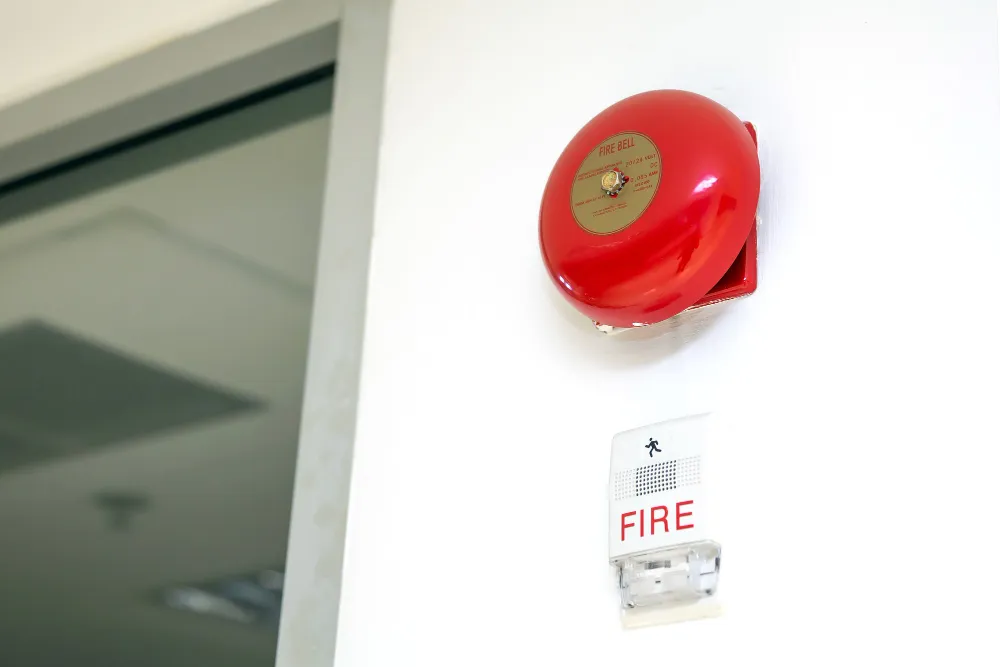
A full system replacement is not always necessary or even the smartest use of budget. In many buildings, a strategic fire alarm upgrade targeting the weakest parts of the system delivers most of the same benefits at a fraction of the cost.
These are the seven upgrades we recommend for buildings that are not quite ready for a full teardown.
1. Replace Aging Detectors with Newer Models
The first upgrade you can consider is replacing old detectors with newer ones. Newer smoke and heat detectors offer better sensitivity, fewer nuisance alarms, and compliance with current UL 217 and UL 268 standards, particularly around cooking appliance placement. Swapping detectors is often the single highest-impact and lowest-cost upgrade available.
2. Upgrade to an Addressable Fire Alarm System
Conventional systems tell you which zone triggered an alarm. On the other hand, addressable systems, like those built on Silent Knight platforms, identify the exact device that was activated, significantly reducing response time in larger buildings with multiple floors or wings. So, instead of relying on traditional systems, it’s better to install smart addressable fire alarm systems to reduce response time.
3. Upgrade Emergency Notification Devices
One of the most significant upgrades you can make is upgrading your emergency notification devices. ADA guidelines require devices such as horns, strobes, and voice evacuation speakers to reach all occupants, including those with hearing or visual impairments. Upgrading notification devices closes coverage gaps that older systems designed for smaller or differently laid-out buildings often leave behind.
4. Add Carbon Monoxide Detection
Carbon monoxide is as life-threatening as fire. Since it cannot be seen or smelled, it’s more difficult to identify and address. That’s why many jurisdictions now require CO detection to be integrated directly into the fire alarm system.
So, if your building type and local code requirements allow, you should integrate carbon monoxide detection into your fire alarm system. It adds another layer of life-safety protection.
5. Enable Remote Monitoring Capabilities
Another simple yet effective upgrade is to enable remote monitoring. Cloud-connected panels send real-time alerts to property managers and monitoring centers the instant a device activates, rather than relying solely on an on-site audible alarm.
For example, commercial video monitoring paired with fire alarm remote monitoring gives decision-makers visibility into an event before emergency responders even arrive.
6. Integrate With Other Building Systems
A well-integrated fire alarm can automatically shut down HVAC systems to slow smoke spread, unlock exit doors, and recall elevators to the ground floor during an alarm event. These integrations turn a fire alarm from a standalone device into part of a coordinated building response. So, it’s recommended to integrate fire alarms with other home fire and life safety solutions.
7. Upgrade Backup Power and Diagnostics
Reliable backup power is usually the backbone of every fire alarm system. If the backup fails, the system may not provide the expected protection. That means if your existing setup contains older batteries or aging power supplies, it might fail when an emergency occurs.
Another factor is that older alarm systems often have limited diagnostic capabilities. That limitation makes it harder to identify developing faults before they cause a failure. That’s why it is important to upgrade backup power and diagnostic systems on time. With modern equipment installed, you get:
- Better battery supervision
- Advanced self-diagnostics
- Faster fault reporting
- Improved maintenance reporting
- More reliable backup operation
Wrapping It Up
Replacing or upgrading a fire alarm system before it fails helps protect your family, employees, and property. By recognizing these warning signs early, you can avoid unexpected failures and maintain reliable fire protection.
If you want to hand over the upgrade work to a professional and trusted company, Elite Security Alarm Systems is here to take the responsibility. We have helped homeowners and businesses across South Florida protect their properties since 1997 with customized fire alarm, life safety, and security solutions. Contact us today for a free consultation.
Frequently Asked Questions
How often should a fire alarm system be replaced?
Smoke alarms should be replaced every ten years or as the manufacturer recommends. Other parts of the system, such as wiring and control panels, can last much longer than this, provided they are compliant and checked regularly.
Can I upgrade parts of my system instead of replacing it all?
A fire alarm system usually consists of different components. These include sensors, detectors, wiring, control panels, and batteries, and all of them have their own lifespan and problems. That means it is practically possible to upgrade only certain parts of the system.
Is it cheaper to repair or replace an aging fire alarm system?
Repairing an existing fire alarm system remains cheaper only as long as the problem does not occur repeatedly. If a particular device from your setup stops working repeatedly, it is better to replace the device than to spend money on its repairs.
Who should I hire to replace or upgrade a fire alarm system?
Many homeowners think that they can replace or upgrade fire alarm systems on their own, which is completely wrong. You should always hire a professional company like Elite Security Alarm Systems to get your equipment repaired and upgraded in a professional manner.
Can an older system still meet code requirements?
Fire safety codes are constantly changing. Your older system may be technically up to code locally, but just because you are meeting code doesn’t mean you are actually protected. Regular inspections keep you current with today’s NFPA standards.