
According to the National Fire Protection Association (NFPA), working fire alarms reduce the death rate from home structure fires by about 60% compared to homes with no alarms or non-working alarms. That single statistic shows how much an early warning system against fire matters for your family.
As licensed contractors in Florida, our team at Elite Security Alarm Systems has spent years designing and installing fire safety systems for families throughout our communities. We know that protecting your home can feel confusing with so many devices and options on the market.
We are writing this guide to break down everything you need to know about modern home fire protection so you can make the right choice for your home.
Key Takeaways
- A fire alarm system gives your family the precious time needed to exit safely during a home fire.
- When one sensor picks up smoke, interconnected alarms make sure every alarm in the house sounds at the same time.
- Monitored systems reach out to emergency responders automatically, even if you’re away, asleep, or can’t get to a phone.
- Where you place the sensors matters as much as the hardware; every floor and bedroom should have one.
- Chirping sensors or frequent false alarms are usually a sign of low batteries or a unit that’s simply reached the end of its life and needs replacing.
What Is a Home Fire Alarm System, and How Does It Work?
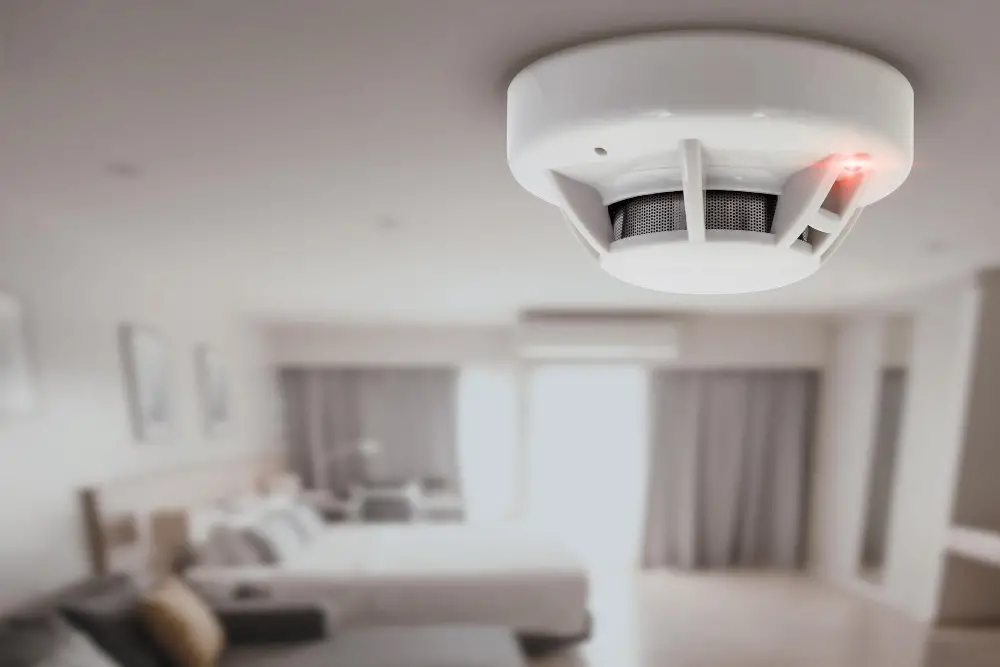
A home fire alarm system goes beyond a basic smoke alarm. It can connect smoke detectors, heat detectors, and other warning devices so they work together to alert everyone in the house when there’s a problem.
When the sensors detect a sudden rise in temperature or combustion particles in the air, they immediately trigger high-decibel sirens and flashing lights to wake you up and get your household moving toward safety.
3 Main Types of Home Fire Alarm Systems
To help you compare your options at a glance, we put together a simple breakdown of how the three main types of fire alarm systems stack up:
| Feature | Standalone Smoke Alarm | Interconnected Alarms | Monitored Fire Alarm System |
| Local audible warning | Yes | Yes | Yes |
| Alerts throughout the home | No | Yes | Yes |
| Mobile notifications | Usually no | Available on some models | Often available |
| Professional monitoring | No | Usually no | Yes |
| Emergency response support | No | No | Yes |
| Security-system integration | No | Sometimes | Yes, with compatible equipment |
Standalone Smoke Alarms
Standalone units are basic, battery-powered devices that operate independently. If a standalone detector senses smoke, only that single unit makes noise.
They’re simple to install, but each standalone alarm works on its own. If one goes off, it won’t trigger the other alarms in the house. If a fire starts in your basement or garage, a standalone alarm down there might not be loud enough to wake you up in a second-story bedroom until smoke has already filled the hallway.
Because of these distance limits, standalone alarms work best in smaller single-story homes, compact apartments, or guest rooms where a single siren can easily be heard throughout the entire space.
Interconnected Fire Alarms
Interconnected alarms link every detector in your house, either through thin wiring in the walls or via wireless radio signals. They are ideal for multi-story houses or homes with basements.
When one sensor catches smoke in the laundry room, every single alarm in the house starts sounding at the exact same time. That shared network means you hear the warning right away, no matter where you are resting or where the fire starts.
Professionally Monitored Fire Alarm Systems
A monitored fire alarm system adds another layer of protection by sending alarm signals to a monitoring center, even when you are away from home. If a detector senses smoke or heat, the system instantly notifies trained operators who confirm the alarm and call the fire department for you.
It provides reassurance to families who travel often, have pets left alone during the day, or share a home with young children and elderly family members.
What Devices Can a Home Fire Alarm System Include?
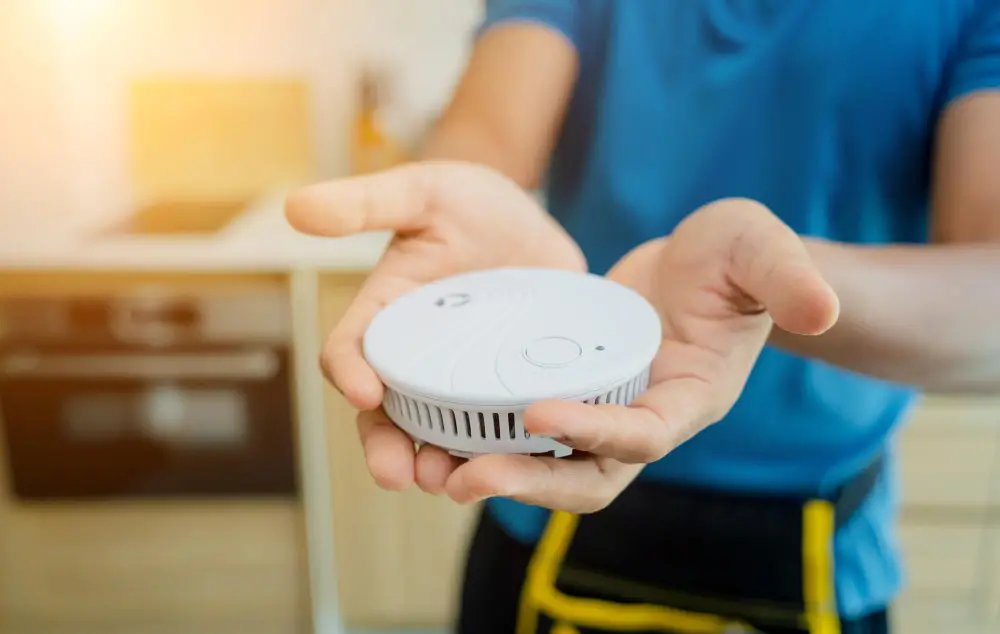
Not every fire alarm system will include all of these devices. What ends up in your home depends on the type of system you choose, your property’s layout, the fire risks specific to your space, and whether you opt for professional monitoring.
Usually, the main components of a comprehensive fire alarm system are:
Smoke Detectors
These are your first line of defense. Ionization models pick up fast-moving flame fires quickly, while photoelectric models are better at catching slow, smoldering blazes before they turn into something bigger.
The dual-sensor alarm is the favorable option that combines both technologies in one unit, so you’re covered no matter which type of fire breaks out.
Heat Detectors
Heat detectors are built for spots like garages, attics, and workshops, where dust, steam, or exhaust fumes would keep setting off a regular smoke detector.
Instead of detecting smoke, heat detectors respond when the temperature reaches a set point. Some models can also detect a rapid rise in temperature.
Carbon Monoxide Detectors
You can’t see or smell carbon monoxide, which is precisely why it’s so dangerous. It typically leaks from fuel-burning appliances like furnaces or gas stoves, and by the time symptoms show up, exposure has often already gone too far. A CO detector is what catches it before that point.
Fire Alarm Control Panel
In a monitored system, the fire alarm control panel is the central hub tying everything together. The moment it picks up a signal from your sensors, it directs the response instantly:
- Sets off indoor and outdoor sirens
- Sends an alert straight to your phone
- Signals the monitoring station to dispatch emergency help
Audible and Visual Notification Devices
Loud sirens, spoken-voice warnings, and bright strobe lights work together to make sure everyone in the house gets the message fast.
Communication and Backup Equipment
Even if your home Wi-Fi drops, cellular modules keep your system connected to dispatchers. And if the power goes out, backup batteries keep your sensors up and running.
Where Should Fire Detectors Be Installed in a Home?
Where you put your devices matters just as much as which ones you buy. As a general rule, you’ll want smoke alarms on every level of the home, inside each bedroom, and along the hallways outside sleeping areas.
In an interconnected system, using those key spots means a fire that starts in the basement won’t go unnoticed upstairs; every alarm sounds together right away.
A monitored system follows those same core locations, with one added layer: every detector ties back to a central panel.
It’s worth having a professional installer walk through your home to confirm placement. A professional installer can help you choose the right locations for each device and avoid spots that may lead to nuisance alarms.
How to Choose the Right Residential Fire Alarm System
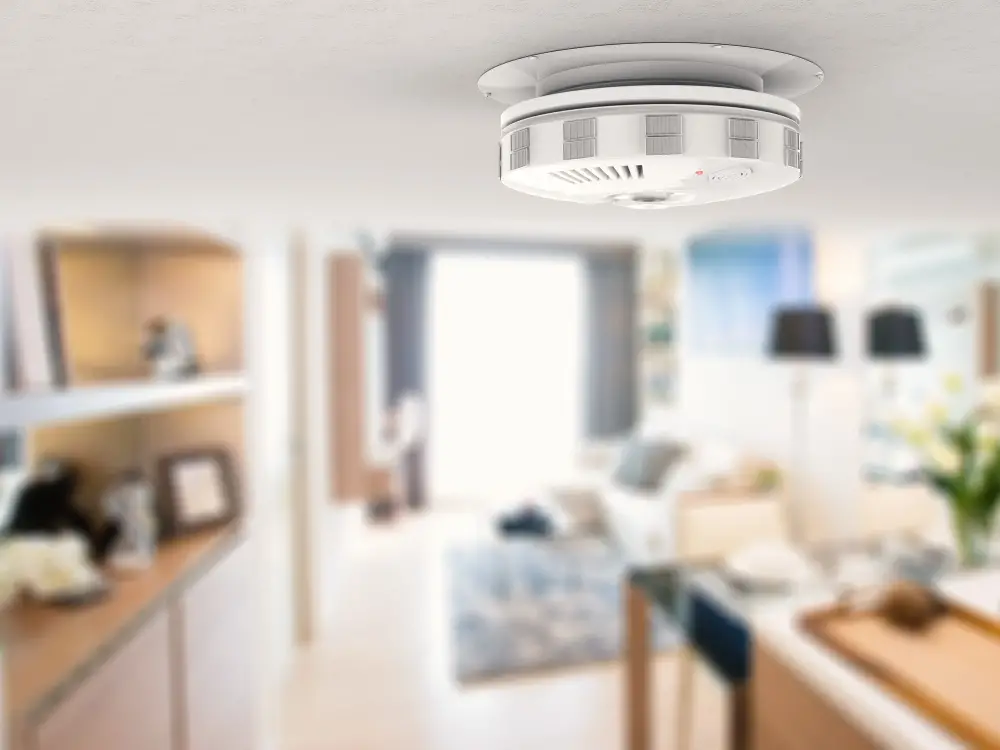
There’s no single “best” system that works for every house. The right choice depends on a few things specific to your home, and here’s how you can figure out what makes sense for yours:
Consider the Size and Layout of Your Property
The bigger or more spread out your home, the harder it is for a single alarm to do its job. That’s why larger or multi-story homes need interconnected or monitored systems, ones built to carry the warning across long distances.
Account for Everyone in the Household
If you have young children, elderly parents, or family members who are hard of hearing, it helps to consider systems with spoken voice prompts or flashing strobe lights. A clear voice telling kids what to do helps prevent panic during a nighttime emergency.
Look at Your Home’s Existing Wiring
If your home isn’t wired for interconnected alarms, wireless models can connect alarms in different areas without running new interconnection wires through the walls.
Evaluate Power and Internet Reliability
If you’re going with a monitored system, it’s worth picking a model with built-in cellular backup so your home stays protected even through a power failure or Wi-Fi outage.
Decide How You Want to Handle System Maintenance
Standalone and standard interconnected systems require you to handle testing, battery replacements, and troubleshooting yourself.
Monitored systems backed by professional service include system health tracking and technician support to keep your setup error-free.
What Should You Do When a Fire Alarm Sounds?
When your alarm triggers, every second counts, so react immediately:
- Crawl under smoke toward your nearest exit door or escape route.
- Before opening a door, feel the handle with the back of your hand; if it feels hot, leave the door closed and use a second exit or window.
- Get to your family’s designated meeting spot right away, whether that’s a specific tree, the mailbox, or a neighbor’s driveway.
- No matter what’s left inside, don’t go back in for it, not for belongings, not for pets. Stay outside and call emergency services immediately.
Common Residential Fire Alarm Problems Homeowners Should Not Ignore
Fire alarms require minimal attention, but ignoring minor warning signs can compromise your safety if a fire breaks out. Here are a few issues worth taking seriously:
- Frequent False or Nuisance Alarms
If cooking fumes or shower steam keep setting off your alarm, do not disable it by removing the batteries. Follow the manufacturer’s cleaning and placement instructions. If the problem continues, ask a qualified professional whether the alarm type or location needs to change. If you ever need to silence a system after confirming there is no emergency, follow the proper steps for turning off a fire alarm safely.
- A Detector That Chirps Repeatedly
A single low-pitched chirp every minute usually indicates a low battery or an internal sensor error. Replace the battery right away to restore full operation.
- Missing Coverage in New or Renovated Rooms
If you have finished a basement, added an office, or remodeled a bedroom, make sure to add new interconnected devices so your renovated space isn’t left in a coverage blind spot.
- Devices That No Longer Communicate With One Another
If an alarm test trips one sensor but leaves nearby units silent, your interlink connection has failed. Test your system monthly to catch communication failures early.
Older devices can also become less reliable over time, so homeowners should know when to replace fire alarms rather than relying on aging equipment indefinitely.
Conclusion
A reliable fire detection and fire alarm system is mainly about two functions: full coverage across your home and a direct line to help when seconds matter most.
Some households do fine with simple interconnected alarms. Others, especially those who travel often, have kids, or just want the peace of mind that comes with 24/7 monitoring, are better served by a professional home fire monitoring system. Choosing the right setup gives your family the warning time needed to stay safe.
If you’re ready to protect your home with an expert, custom-designed system, contact Elite Security Alarm Systems today to schedule your free home safety consultation.
FAQs
What is the best fire alarm system for a home?
If you’re weighing your options, a professionally monitored, interconnected setup is usually the strongest choice for most homes. You get the best of both worlds: every alarm sounds together the moment a danger is detected, and emergency services are called automatically, even on the days you’re not around to make that call yourself.
Will a fire alarm still work during a power or internet outage?
It should, as long as you’ve picked a quality system. Backup batteries keep the sensors and sirens running even when the main power cuts out. Monitored systems go a step further with cellular transmission modules, so the alert reaches the dispatch center even if your Wi-Fi is down at the time of the emergency.
Does a monitored fire alarm automatically notify the fire department?
A professionally monitored system can send a fire alarm signal to a 24/7 monitoring center. The monitoring team then follows the required response procedure, which may include notifying the appropriate emergency dispatch service.