
According to the U.S. Fire Administration, the United States recorded an estimated 111,900 nonresidential building fires in the latest reported year. For business owners, this figure highlights the absolute importance of having a dependable fire alarm system in place.
Here, the question is whether a wireless alarm system or a wired setup is better for your building requirements, budget, and long-term operational needs.
As a state-licensed Florida alarm contractor with over 25 years of experience, we understand how different fire alarm systems fit different commercial properties.
This guide compares wired and wireless options to help you understand their benefits, limitations, and costs.
Quick Overview
A wired fire alarm system is connected with cables from each detector and pull station to a central panel. A wireless system communicates via radio between compatible field devices and the control equipment, reducing the need for wiring for each one.
What Are Wireless Commercial Fire Alarm Systems?
Wireless commercial fire alarms protect your building without the need to wire every device. Smoke detectors, heat sensors, and pull stations connect back to the main panel through secure radio signals.
Each sensor runs on its own long-life lithium battery, so installers can mount devices straight onto finished walls and ceilings without cutting into drywall or running heavy metal conduit.
Pros of Wireless Fire Alarm Systems
- Crew members can mount devices straight onto existing walls without tearing into plaster, pulling wire, or causing noise disruptions.
- Wireless devices can reduce installation time when running new cable would require extensive work in finished walls or ceilings.
- You can avoid the mess and extra payroll associated with drywall patching, repainting, or fire-stopping after installation.
- Wireless systems are ideal for historic properties or leased spaces where cutting into surfaces isn’t allowed.
- Some approved wireless systems use redundant communication paths or mesh-network technology. These designs can provide alternative paths when a direct radio connection becomes unavailable.
Cons of Wireless Fire Alarm Systems
- The devices themselves cost more upfront than standard wired sensors.
- You need to replace the batteries in every sensor every few years.
What Are Wired Commercial Fire Alarm Systems?
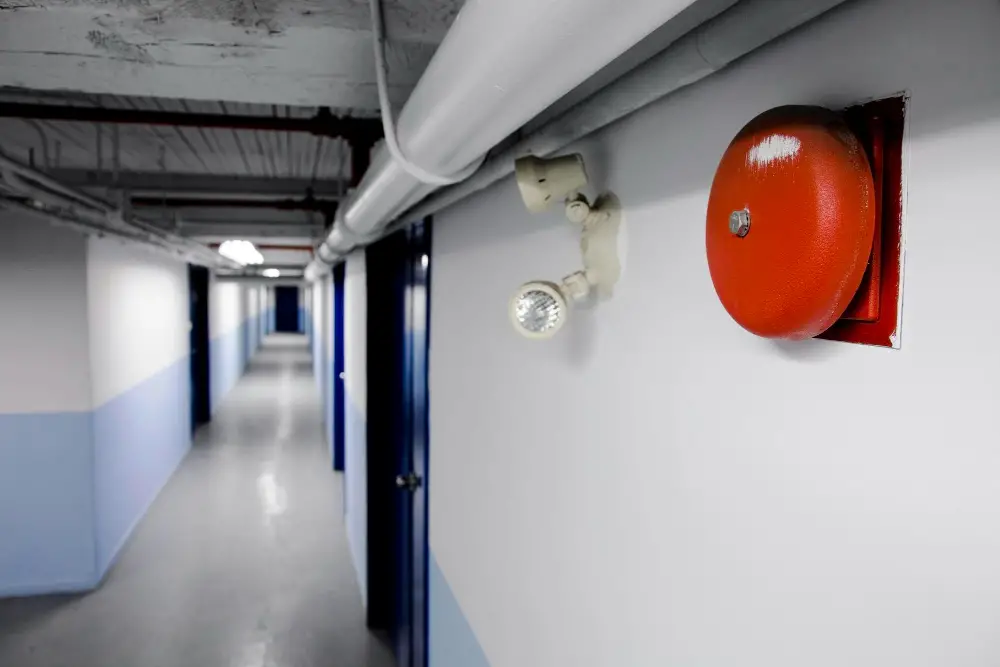
A wired commercial fire alarm relies on physical copper cables to connect every smoke detector, pull station, and alarm speaker to a central panel. Technicians run these lines behind walls, above drop ceilings, or inside protective metal conduit.
Since pulling cable is quick and inexpensive while walls are still open, hardwired setups are a common choice for new construction and major renovations.
Pros of Wired Fire Alarm Systems.
- Since most devices draw power through the wires, you do not have to replace individual sensor batteries.
- Basic replacement heads, pull stations, and strobes tend to cost less than specialized wireless units.
- Wired field devices typically receive operating power through the system wiring, which reduces the need to replace batteries at individual devices.
- Connecting them to other equipment, like sprinkler valves or HVAC shutoffs, is simple and direct.
- Wired devices do not depend on radio communication between field devices and the control equipment. However, the wiring still requires proper installation, supervision, and maintenance.
- Both wired and wireless systems must meet applicable fire codes and local approval requirements.
Cons of Wired Fire Alarm Systems
- It takes serious labor and heavy drilling to run wire through concrete, plaster, or drop ceilings in existing buildings.
- Damaged wiring can cause troublesome conditions or affect devices on part of the system. The impact depends on the circuit design and location of the fault.
- Moving a device or adding a new room later means tearing back into walls and pulling fresh wire, which gets messy and expensive fast.
What Are the Main Differences Between Wired and Wireless Commercial Fire Alarm Systems?
While both wired and wireless fire alarms do the same core job, they operate very differently behind the scenes. The real contrast comes down to physical cabling, setup time, how devices draw power, and how easily the system adapts to building changes.
Here is a direct comparison of both types of system:
| Feature | Wired System | Wireless System |
| Connection | Physical copper cabling | Encrypted radio signals |
| Setup | Labor-heavy (drilling & wiring) | Fast & surface-mounted |
| Reliability | Exceptionally stable | Highly stable with proper signal design |
| Power | Typically supplied through system wiring | Often battery-powered at wireless field devices |
| Upkeep | Low (main panel focus) | Periodic sensor battery swaps |
| Expansion | May require additional cabling | May require less new cabling |
| Best For | New builds & permanent spaces | Retrofits and locations where new cabling is difficult |
Cost Comparison: Wireless vs. Wired Fire Alarm Systems
To figure out what a fire alarm actually costs, you need to look beyond the initial price tag on the control panel. Wired systems use lower-cost hardware but require heavy installation labor, while wireless hardware carries a higher per-device price tag to cut down on site prep and labor hours.
Across the US, total turnkey costs include a one-time installation fee (panels, field devices, permits, and labor) along with an ongoing monthly charge ($30 to $100/month) for 24/7 central station monitoring.
How those total initial costs break down depends directly on your building size:
- Small Spaces (Under 2,000 sq. ft.):
- Wired: $1,000 to $2,500
- Wireless: $1,500 to $3,500
- Medium-to-Large Buildings (5,000 to 10,000+ sq. ft.):
- Wired: $6,000 to $25,000
- Wireless: $4,000 to $18,000
Note: The figures shown represent typical industry averages; precise pricing requires a professional site survey and an engineered system design.
Can a Commercial Fire Alarm System Be Both Wired and Wireless?

Commercial fire alarm systems can combine both wired and wireless components into a single hybrid system. Hybrid fire alarms connect directly to a primary wired control panel while using wireless receiver modules to link remote or hard-to-reach sensors.
Hybrid fire alarms are an ideal solution if you’re expanding or remodeling. When the existing system supports compatible wireless equipment, a hybrid design may allow you to add devices without running new cable through every finished area. A professional can check your current system and determine which upgrades are compatible.
Which Alarm System Is Better for Your Business?
When deciding between hardwired and wireless sensors, consider your building type, budget, and business plans. Here is how to decide:
Go With a Wired System If:
- You are building a new structure or renovating, so you can install cables before the walls are closed.
- Local fire codes or specialized property hazards require hardwired equipment.
- You want simpler maintenance focused on the main control panel instead of changing individual device batteries.
Go With a Wireless System If:
- You lease your commercial space and need an easy setup that will not damage the walls.
- Your building features plaster, poured concrete, or historic details that are particularly difficult to drill through.
- You cannot afford to close down or interrupt daily business for noisy cabling work.
- You expect to expand, rearrange offices, or move devices around as your business grows.
Go With a Hybrid System If:
- You need to connect separate outbuildings or upper floors without running pricey underground wires.
- You need to fix specific coverage gaps to pass a fire inspection without tearing up finished walls.
Final Thoughts
A fire alarm system for your business keeps your team, physical space, and daily operations safe. Finding the right balance between wired, wireless, or a mix of both takes a bit of planning, but you don’t have to map it out alone.
At Elite Security Alarm Systems, we help you figure out the right fit for your building without the headache and manage the entire process. Contact us today to schedule your free consultation.
Frequently Asked Questions
How Long Do Wireless Fire Alarm Batteries Last?
Battery life varies by system, device type, and usage. Many commercial wireless fire alarm devices use long-life batteries, but they still require regular inspection and replacement in accordance with the manufacturer’s specifications and applicable fire safety requirements.
Are Wireless Commercial Fire Alarm Devices Reliable?
Properly designed and approved wireless fire alarm systems can provide reliable communication between compatible devices and control equipment. Their performance depends on correct system design, signal testing, and ongoing maintenance.
Can an Existing Wired Fire Alarm System Be Upgraded With Wireless Devices?
Yes, by installing a wireless receiver module right onto your current wired control panel, you can easily fold wireless sensors into new building additions or tricky, hard-to-wire spots without replacing your core system.