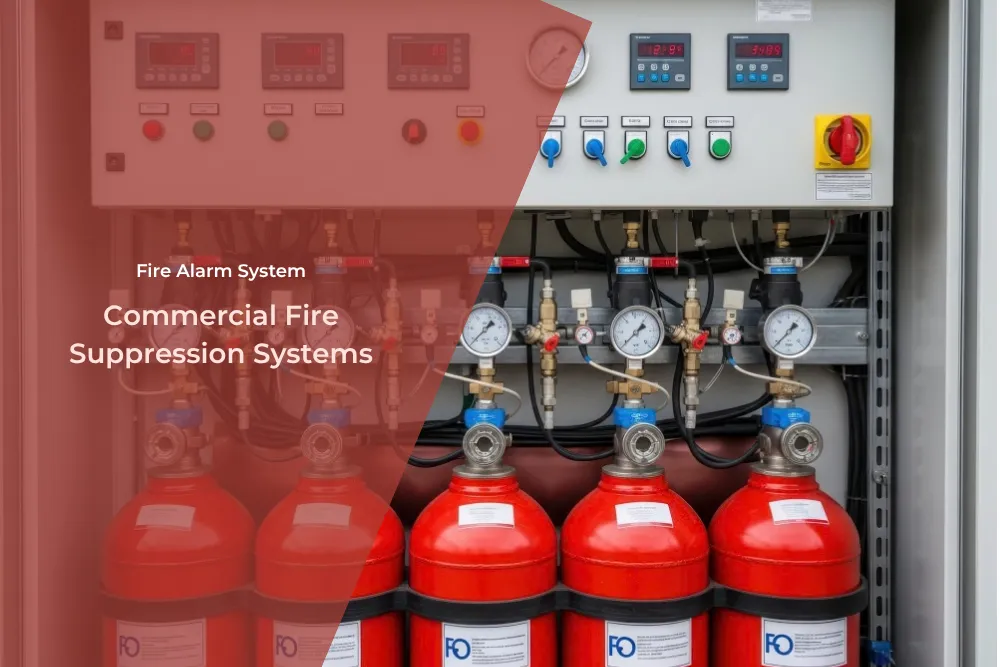
A commercial fire can disrupt operations quickly, and the right suppression system depends on the specific hazards within your property. If you own or manage a commercial building in South Florida, your suppression system needs to match the materials, equipment, and specific fire hazards within the property.
This guide walks you through the main types of fire suppression systems, what drives the cost, and how to match the right one to your building before an inspector, insurer, or fire marshal forces the decision for you. So, let’s learn which fire suppression system you should choose.
What Is a Commercial Fire Suppression System?
A commercial fire suppression system is a professionally designed system that detects, controls, or extinguishes a fire in a business or other commercial property. Depending on the hazard, it may use water, foam, dry chemicals, wet chemicals, carbon dioxide, or a clean agent.
A suppression system is different from a fire alarm. A fire alarm warns people about a possible fire. A suppression system actively controls the fire itself.
For example, a water-based suppression system may use heat-activated sprinklers to release water over the affected area. A commercial kitchen suppression system uses a different approach, releasing a wet chemical agent over protected cooking equipment and activating connected fuel shutoffs.
How Does a Fire Suppression System Work?
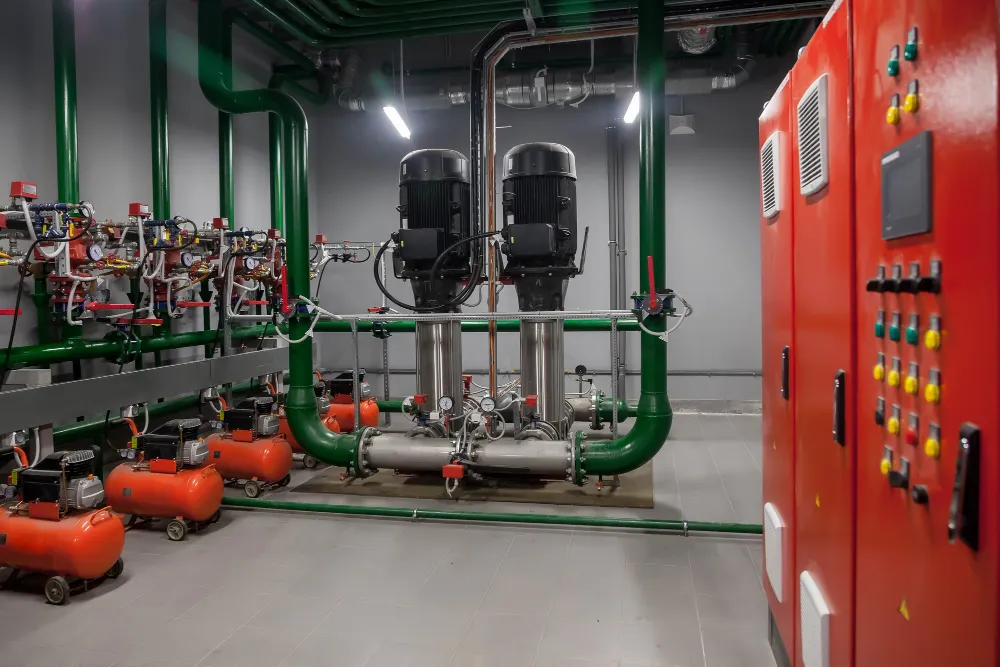
The design of a fire suppression system determines how it activates. Some sprinkler systems activate when heat operates an individual sprinkler, while other suppression systems may use separate heat, smoke, or flame detection before releasing an extinguishing agent. Most systems follow a similar chain of events, though the details change by system type. Let’s walk through the common mechanism of such systems:
- A sensor (heat-sensitive glass bulb, smoke detector, or flame sensor) detects the fire.
- The system triggers a local alarm and, in most commercial setups, sends a signal to a monitoring center.
- The extinguishing agent, water, foam, gas, or dry chemical, is released through the piping or nozzle network.
- The agent cools the fire, smothers its oxygen supply, or interrupts the chemical reaction that keeps it burning.
Why Commercial Buildings Need Fire Suppression Systems
Commercial buildings need fire suppression because fires can spread quickly while people are still discovering the problem, evacuating, or calling for help.
The U.S. Fire Administration estimates that 111,900 nonresidential building fires occurred in 2024. Cooking accounted for 29.7% of those fires, while electrical malfunction accounted for 7.2%. For a business owner, the risk of fire extends beyond the building itself.
For example, a serious fire can damage inventory, equipment, records, production areas, and customer property. It can also interrupt normal operations for days or much longer. That is the reason why having active fire suppression systems is important for both small and large commercial buildings.
What Types of Fire Suppression Systems Are Used in Commercial Buildings?
Commercial fire suppression systems use several different suppression methods, including water-based systems, wet and dry chemical systems, clean agents, carbon dioxide, and foam. Here are some of the most widely used systems that we see across commercial buildings:
Water-Based Fire Suppression Systems
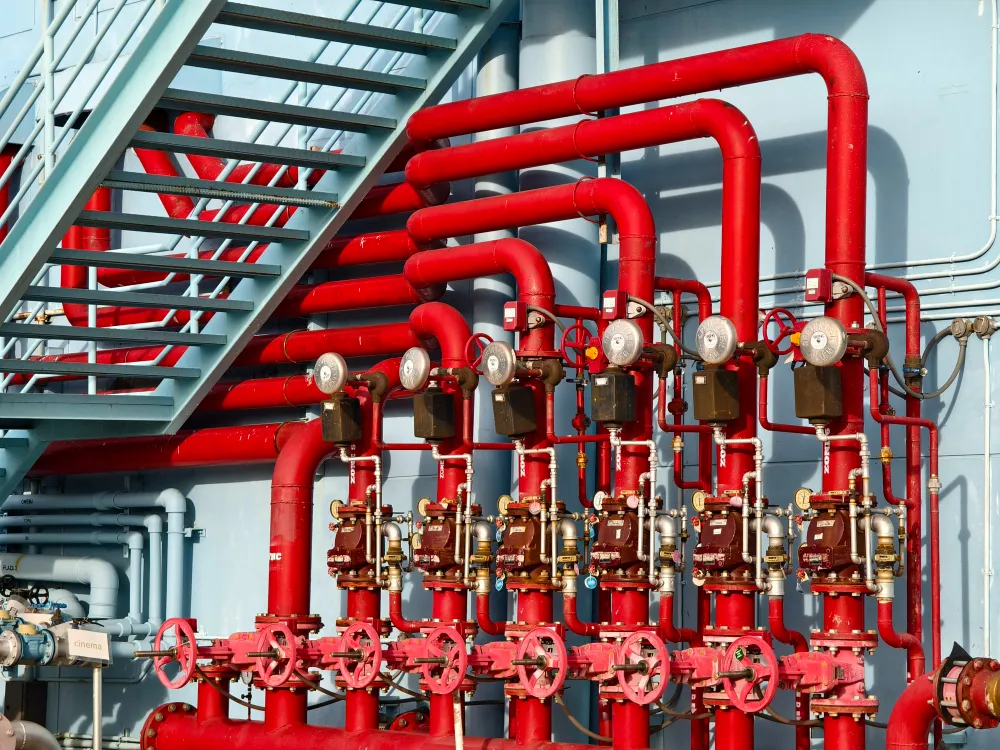
Water-based systems are the most common form of commercial fire protection and cover general building risks such as offices, retail floors, classrooms, and common areas. NFPA 13 is the standard that governs their design and installation in nearly every U.S. commercial building. These systems are further categorized into the following types:
Wet Pipe Systems
A wet pipe system keeps water inside the sprinkler piping. When heat activates a sprinkler, water discharges through that sprinkler. Its design works well in many commercial spaces that stay above freezing.
For example, an office or retail store with ordinary fire hazards may use a wet pipe system when the building’s design and applicable codes support it.
Dry Pipe Systems
Dry pipe systems hold pressurized air in the piping instead of water, and the water only enters the pipes after a sprinkler head activates and the air pressure drops. Buildings use dry pipe systems in unheated spaces like
- Parking garages
- Loading docks
- Attics,
These systems are used in these spaces because standing water in the pipes could freeze in colder climates.
Pre-Action Systems
Pre-action systems use supplemental detection and controlled valve operation before water is admitted to the sprinkler piping. The exact activation sequence depends on whether the system uses a single-interlock, double-interlock, or another approved design.
Facilities with expensive, water-sensitive equipment, such as data centers, libraries, and museums, use pre-action systems specifically to prevent accidental discharge from a damaged pipe or a false alarm.
Deluge Systems
Deluge systems use open sprinklers or nozzles rather than heat-activated closed sprinklers. When the deluge valve operates, water can discharge through all open outlets in the protected area. So, when the detection system triggers, water floods the entire zone at once instead of activating individual heads.
High-hazard industrial areas with fast-spreading fire risks, like fuel storage or aircraft hangars, rely on deluge systems because a single-head response would not be fast enough to control the fire. They require careful engineering because the system may release a large volume of water in a short period.
Wet Chemical Systems
Wet chemical systems are commonly used for commercial kitchen fire suppression. They protect cooking equipment and areas where grease and cooking oils create a specific fire hazard. These systems can also integrate with equipment and fuel shutoffs as part of the overall kitchen protection design.
Commercial cooking operations have dedicated requirements under NFPA 96, which covers ventilation control and fire protection for commercial cooking operations. Commercial cooking equipment that produces grease-laden vapors may require a listed fire-extinguishing system designed to protect the cooking appliances, hood, and associated exhaust components.
Clean Agent Systems
Clean agent systems use gaseous extinguishing agents that leave little or no residue after discharge, making them suitable for areas with sensitive equipment.
Depending on the agent, they suppress fires by absorbing heat or interfering with the combustion process. These systems are designed in accordance with NFPA 2001, the National Fire Protection Association’s standard for clean agent fire extinguishing systems.
They are suitable for areas containing sensitive equipment where water or powder could create additional damage. Data rooms and telecommunications spaces are some common examples of such areas.
CO₂ Systems
CO₂ systems use carbon dioxide to suppress certain fires. They can serve specialized industrial applications where the agent fits the hazard.
However, CO₂ creates serious life safety concerns because high concentrations can be dangerous to people. OSHA requires safeguards and warning measures for fixed extinguishing systems where the agent can create hazardous exposure.
For that reason, CO₂ should never be treated as a simple substitute for a sprinkler system.
Foam Systems
Foam systems spread a blanket of foam over a fire’s surface, cutting off oxygen and preventing flammable vapors from reigniting the fuel. Foam systems may be used for certain flammable-liquid hazards because foam can help control vapors and provide protection suited to the specific fuel hazard.
Dry Chemical Systems
Dry chemical systems release a chemical extinguishing agent onto a protected hazard. They can provide rapid suppression in certain specialized applications. However, their biggest disadvantage is cleanup. The agent can leave residue that may damage equipment or require substantial cleanup after discharge.
How Much Do Commercial Fire Suppression Systems Cost?
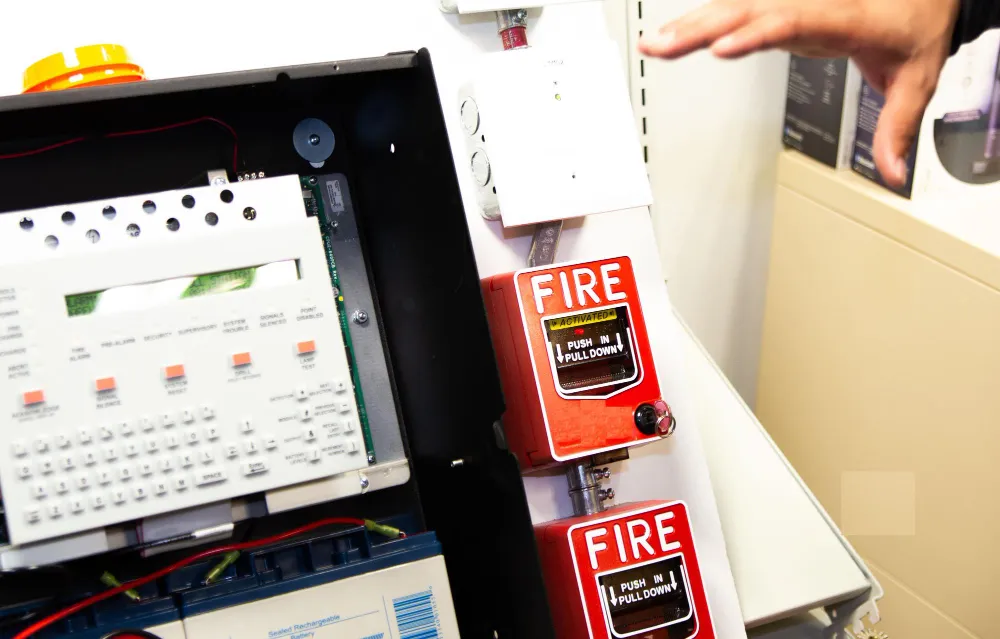
Current industry estimates show that basic sprinkler installations can run roughly $1.50 to $3 per square foot in new construction, while retrofits can reach about $2 to $7 per square foot, depending on building conditions and scope. The table below shows a quick breakdown of typical cost ranges by system type:
| System Type | Typical Cost Range | Notes |
| Wet pipe sprinklers (new construction) | $2–$5 per sq ft | Standard NFPA 13 light-to-ordinary hazard |
| Wet pipe sprinklers (retrofit) | $4–$10 per sq ft | Higher due to existing construction |
| Wet chemical kitchen system | $3,000–$8,000+ per hood | Varies by hood size and appliance count |
| Clean agent system | $10,000–$50,000+ | Depends on room size and agent type |
| Dry pipe sprinklers | Slightly higher than wet pipe | Extra components for air/nitrogen supply |
| Foam or dry chemical systems | Highly variable | Depends on hazard classification and coverage area |
However, remember that these ranges may vary substantially by project. For example, a 2,000-square-foot office and a 20,000-square-foot warehouse can have very different requirements even if they use the same general suppression method.
Which Fire Suppression System Is Right for Your Commercial Building?
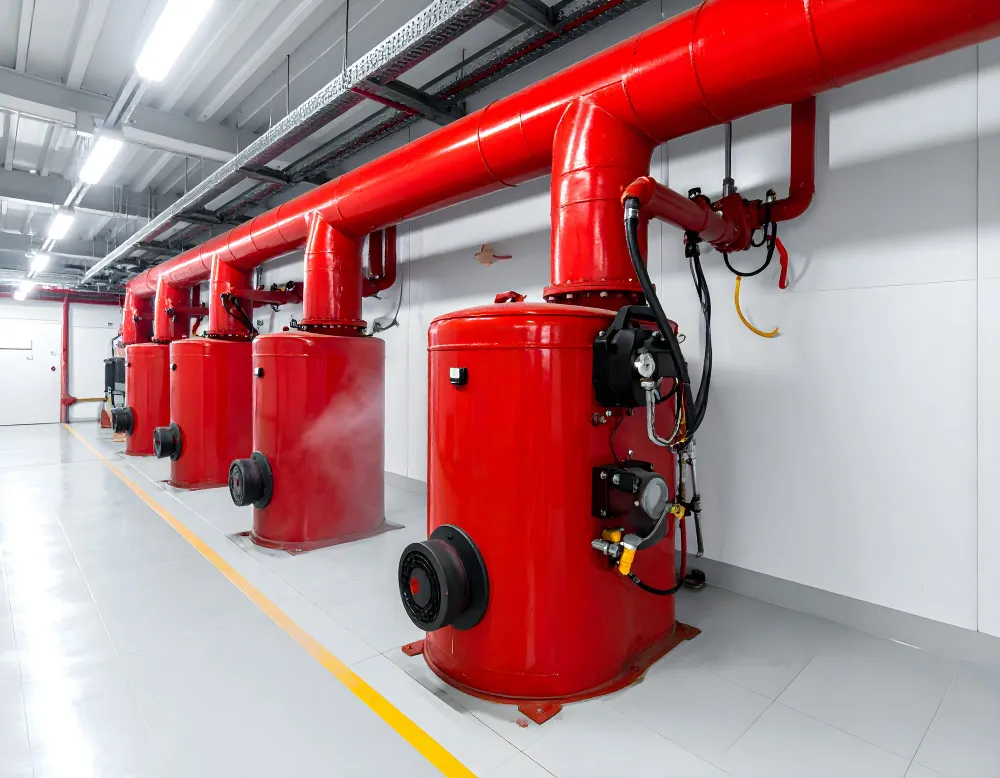
Commercial buildings vary in fire risk and layout. The right system is the one that matches your actual fire hazard and building conditions while meeting applicable requirements.
These factors can help you understand your options, but they cannot determine the system your property legally requires. A qualified fire protection professional should evaluate the building, hazards, applicable codes, and local authority requirements before selecting or designing a system.
How to Choose the Right Fire Suppression System
Choosing the right system starts with identifying what actually burns in your building, then working backwards through occupancy, cost, and code requirements. Here is what to consider when choosing a fire suppression system for your commercial building:
Identify the Main Fire Hazards
First of all, ask what could actually start and feed a fire. A restaurant may have cooking oils and grease. A warehouse may have large quantities of stored materials. A server room may contain sensitive electronics. Keep in mind that your answer will affect the system’s recommendation.
Consider What You Need to Protect
Then, think about what you cannot afford to lose, whether that is inventory, servers, historical records, or simply uptime. You may also need to protect:
- People and occupants
- Production equipment
- Electronics
- Documents and records
- Specialized machinery
Account for Occupancy and Building Conditions
You also need to consider the building’s occupancy classification, as it affects fire protection design. At the same time, the condition of your building also influences your decision. So, make sure that you are well aware of the following aspects before choosing a suppression system:
- Occupancy and hazard classification
- Ceiling height and building layout
- Storage height and arrangement
- Ambient temperatures
- Available water supply
Consider Potential Water or Agent Damage
Suppression stops fires, but the extinguishing agent can affect the property too. For example, water may damage sensitive equipment. Similarly, dry chemicals can create cleanup problems.
Gaseous agents, on the other hand, require careful attention to occupant safety. That’s why you should consider potential water or agent damage during the decision process.
Check Applicable Fire Codes and Standards
Remember, never rely on a generic online checklist to determine what your building legally requires. The reason? Because Florida’s fire safety regulations incorporate NFPA standards through the Florida Fire Prevention Code. So, you should always ask a qualified fire protection professional to confirm which requirements apply to your specific property.
To Sum Up
Commercial fire suppression systems protect buildings by controlling or extinguishing fires with an agent suited to the specific hazard. Water-based sprinklers remain common for many commercial spaces, but kitchens, sensitive equipment rooms, cold areas, and high-hazard facilities may need different solutions.
However, the most important decision is not which system costs the least. It is about the system that provides the right protection for your building while meeting applicable fire safety requirements.
Elite Security Alarm Systems helps South Florida businesses build customized fire and life safety solutions around their property and needs. We have served the Homestead and the greater South Florida area since 1997, providing commercial fire and life safety services alongside security, monitoring, surveillance, and other protection solutions.
If you are building a new facility or upgrading an older system, get a free consultation from our experts before committing to equipment.
Frequently Asked Questions
What is the difference between a fire sprinkler system and a fire suppression system?
A fire sprinkler system normally uses water delivered through sprinkler heads, while the term “fire suppression system” covers a broader range of technologies and extinguishing agents. A suppression system can use water, wet chemicals, dry chemicals, foam, clean agents, or CO₂ depending on the hazard.
How much does a commercial fire suppression system cost?
Commercial fire suppression costs vary by system type, building size, hazard level, installation conditions, and code requirements. Current industry estimates put some new-construction sprinkler projects around $1.50 to $3 per square foot, while retrofit projects can cost more.
What type of fire suppression system is required for a commercial kitchen?
Commercial kitchens commonly use wet chemical suppression systems designed for cooking equipment and grease-related hazards. Commercial cooking protection also falls under NFPA 96 requirements.
Can I install a fire suppression system in an existing building?
Yes. Many existing commercial buildings can be upgraded or retrofitted with new systems, but this can be more expensive because the installers have to work around existing walls, ceilings, equipment, utilities, and business operations.
Do all commercial buildings require a fire suppression system?
Not every commercial building has the same suppression requirement. The requirements are based on occupancy, building characteristics, fire hazards, applicable codes, and local requirements. In Florida, the Florida Fire Prevention Code works with the Florida Building Code to set the fire safety requirements.